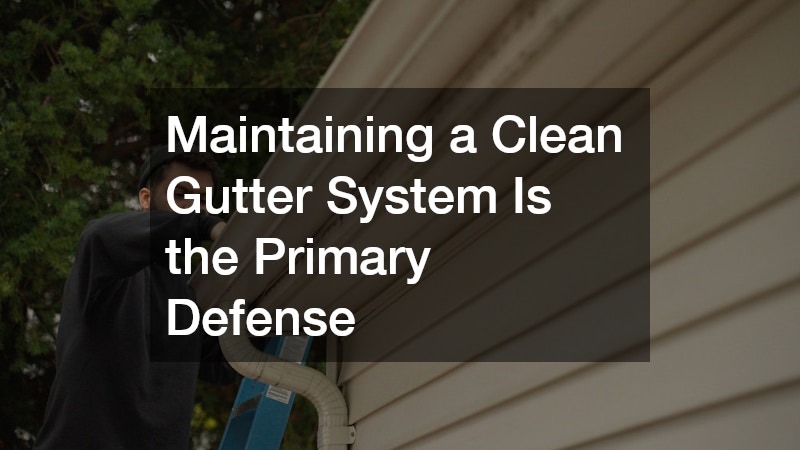
Homeowners often view gutter maintenance as a simple task of flicking away a few stray leaves. However, when a system reaches the point of total failure, a standard sweep isn’t enough; it requires a professional approach to be truly “deep cleaned.” Maintaining a clean gutter system is the primary defense against foundation erosion, basement flooding, and wood rot. Understanding the technical process of a deep clean can help property owners appreciate why manual scooping often falls short of protecting their investment.
The Initial Assessment and Debris Removal
The deep cleaning process begins with a comprehensive inspection of the entire perimeter. Professionals don’t just look for leaves; they look for “muck”—the decomposed organic matter that creates a heavy, sludge-like consistency at the bottom of the trough. This sludge often harbors pests and mold, which can eventually migrate into the attic space. The first step of a thorough clean gutter operation involves the manual removal of this heavy debris using specialized gutter scoops or industrial-grade vacuum systems. Unlike a casual DIY job, professionals ensure that every square inch of the metal surface is visible before moving to the next stage, ensuring no hidden blockages remain.
Pressure Washing and Internal Scrubbing
Once the bulk material is gone, the real “deep clean” begins. High-pressure water systems are used to blast away the fine silt and shingle grit that act like sandpaper against the gutter’s protective coating. This step is crucial because even a thin layer of grit can trap moisture against the metal, leading to rust and leaks over time. By using a controlled pressure wash, technicians can flush the entire length of the system, ensuring that the water flow is perfectly unobstructed. This process also highlights any minor leaks or sagging sections that were previously hidden under the debris, allowing for preventative repairs before the next big storm.
Clearing the Downspout Arteries
A gutter is only as effective as its exit point. The most critical part of a deep clean is addressing the downspouts. When a homeowner tries to clean gutter systems themselves, they often ignore the vertical pipes, where the most stubborn clogs reside. Professionals use “snaking” tools or high-velocity water jets to clear the entire length of the downspout, ensuring it is clear all the way to the ground-level exit or underground drainage pipe. They verify the success of the clean by performing a flow test, simulating heavy rainfall to ensure water exits the system rapidly and away from the home’s foundation.
Final Sanitization and Inspection
To finish a professional deep clean, many services apply a mild biological treatment to kill lingering algae and mold spores. This step prevents the immediate regrowth of “gutter gardens” and keeps the system smelling fresh. The technician performs a final walk-around to ensure all hangers are tight and the pitch of the gutters is still correct. A deep clean isn’t just about aesthetics; it’s a technical reset for the home’s water management system. By investing in this level of detail, you ensure that your clean gutter remains functional and reliable, protecting your home from the top down for years to come.