
Relocating With Young Kids Without Derailing Their Routine

Moving to a new home is stressful enough for adults, but for young kids, it can feel like their entire world is being upended overnight. New bedrooms, new schools, and unfamiliar surroundings can disrupt sleep schedules, eating habits, and emotional security. The good news is that with some planning, you can keep your children’s routines largely intact even during a cross-town or cross-country move. This guide walks through practical steps for protecting your kids’ stability before, during, and after the relocation.

Building a Moving Timeline Around Nap and School Schedules

One of the biggest mistakes parents make is planning a move around their own convenience rather than their child’s biological clock. Try to schedule the bulk of loading, driving, and unloading around your toddler’s nap times or your school-age child’s after-school hours whenever possible. If you’re working with long distance moving companies, ask about flexible pickup and delivery windows so you can align the heaviest moving days with times your kids are least likely to be disrupted.

Building buffer days into your timeline also helps enormously. Instead of trying to unpack everything in a single weekend, give yourself at least three to five days to settle the essentials before tackling the rest of the house. This lets you preserve morning and bedtime rituals even while boxes are still stacked in the living room.

You can prepare children by explaining the moving schedule in age-appropriate terms. A visual calendar or countdown can make each step predictable while showing them which familiar routines will remain.

  • Map out nap times, school pickups, and mealtimes before booking your moving date

  • Ask movers about morning versus afternoon arrival windows

  • Build two to three buffer days into your schedule for unpacking essentials

  • Avoid scheduling move day on the same day as a school event or exam
Choosing Movers Who Understand Family Timelines

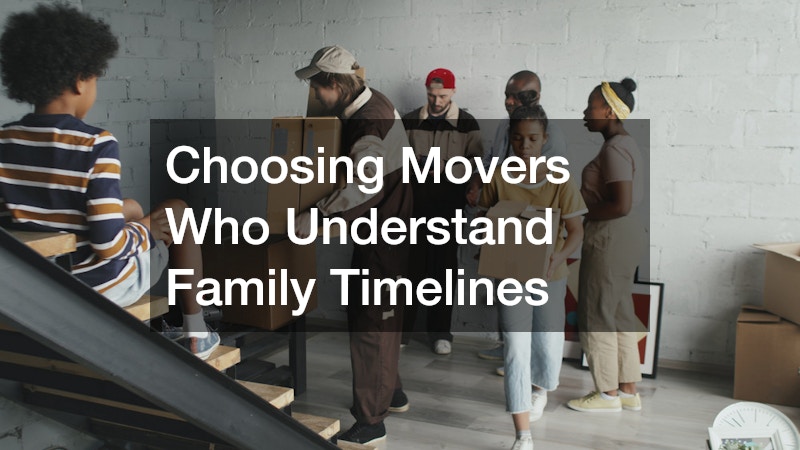
Not all moving services are created equal, and when kids are involved, communication and reliability matter more than ever. Reputable movers and packers will walk you through exactly how long loading and unloading will take, which helps you plan around nap schedules and mealtimes instead of guessing. Ask for a detailed timeline in writing so you can share it with grandparents, babysitters, or anyone helping watch the kids on moving day.

For moves within the same city or region, local moving companies often offer more flexibility than large national carriers, since they typically handle shorter routes and can adjust arrival windows more easily. This flexibility can be a lifesaver if your child has a rigid nap schedule or an early bedtime that simply cannot move. Always confirm cancellation and rescheduling policies too, since kids get sick or schedules shift unexpectedly.

When interviewing movers, explain your family’s timing needs before signing a contract. Clear expectations about meals, naps, quiet periods, and childcare make it easier to coordinate the crew without disrupting your child’s schedule.

  • Get a written estimate of loading and unloading time

  • Ask about rescheduling flexibility in case of illness

  • Confirm whether a consistent crew will handle both pickup and delivery

  • Request references from other families with young children

Packing Your Child’s Room Last and Unpacking It First

Kids thrive on familiar objects, so the goal is to keep their room functional for as long as possible before the move and set it up again as quickly as possible afterward. Pack your child’s bedroom last, leaving favorite toys, blankets, and books accessible until the final hours. Label these boxes clearly and load them so they come off the truck first, ensuring your child’s new room can be assembled before anything else in the house.

Consider packing a separate “first night” bag for each child containing pajamas, a favorite stuffed animal, a toothbrush, and one or two books. This bag should never go into the moving truck at all — keep it with you in the car so it’s guaranteed to arrive exactly when your child does. Having these familiar items on hand reduces bedtime resistance on that crucial first night in a new house.

If possible, photograph the old bedroom before packing it. Recreating a similar layout in the new home, including familiar furniture placement and lighting, can help the room feel recognizable and comfortable sooner.

  • Pack bedrooms last, unpack them first

  • Create a first night bag with pajamas, a comfort item, and toiletries

  • Keep this bag in your personal vehicle, not the moving truck

  • Set up the crib or bed frame before anything else in the new home

Renting Your Own Truck for Short, Local Moves

For families moving a shorter distance, some parents choose to rent box trucks and handle the move themselves rather than hiring a full-service company. This can give you more control over timing, letting you load the truck in stages around your child’s schedule instead of committing to a single all-day event. It also allows you to make multiple smaller trips if that better suits a toddler’s routine.

That said, self-moving requires realistic expectations about your own time and energy, especially with kids underfoot. If you go this route, recruit extra hands from friends or family so one adult can always be focused on childcare while others load and drive. Weigh the cost savings against the added logistical juggling before deciding this is the right approach for your family.

Parents who self-move should plan realistic breaks throughout the day. Keep snacks, drinks, medications, chargers, and children’s essentials accessible so basic needs can be handled quickly without digging through boxes or the truck.

  • Compare rental costs against hiring full-service movers

  • Plan for multiple trips if it better matches your child’s schedule

  • Always have one adult dedicated solely to supervising kids

  • Reserve the truck size that matches your load to avoid extra trips

Moving the Family Piano and Other Bulky Instruments

If your household includes music lessons, moving a piano requires special handling that most general movers aren’t equipped to provide. Specialized piano movers use padded dollies, ramps, and rigging equipment designed specifically for the instrument’s awkward weight distribution, protecting both the piano and your home from damage. Booking this service early is especially important during peak moving season, since specialized crews book up quickly.

Keeping music practice consistent during a move can also give kids a comforting sense of normalcy. If the piano won’t arrive at the new house immediately, consider a temporary keyboard so lessons and practice don’t have to pause entirely. This small continuity can help offset the disruption happening everywhere else in your child’s routine.

If your child follows a regular music lesson schedule, tell the instructor about the move. Temporarily adjusting assignments can preserve the familiar practice routine without adding pressure during an already disruptive week.

  • Book specialized piano transport several weeks in advance

  • Ask whether the crew carries insurance specific to instrument damage

  • Consider a temporary keyboard if there’s a gap between homes

  • Confirm doorway and staircase measurements at both locations beforehand

Deep Cleaning the New Home Before Move-In Day

A newly purchased or rented home may look clean but often carries dust, allergens, and residue from previous occupants that can affect a young child’s sensitive respiratory system. Scheduling carpet cleaning companies to treat flooring before your furniture arrives ensures your child starts crawling and playing on surfaces free of hidden grime. This is especially worthwhile if the previous residents had pets or smoked indoors.

Hard flooring deserves the same attention as carpet. Professional tile and stone cleaning can remove grout buildup and bacteria that accumulate over years, giving you a genuinely sanitary surface for high-chair spills and crawling babies alike. Doing this before move-in day, rather than after, means you’re not working around furniture or trying to keep kids off wet floors in an already chaotic week.

Consider cleaning the rooms children will use most first, including bedrooms, bathrooms, play areas, and eating spaces. Prioritizing these rooms creates dependable zones where everyday routines can continue while unpacking happens elsewhere.

  • Schedule deep cleaning before delivery day, not after

  • Ask about child-safe, low-VOC cleaning products

  • Pay special attention to grout lines in kitchens and bathrooms

  • Allow adequate drying time before letting kids play on the floor

Inspecting Fireplaces and Chimneys Before Winter Use

If your new home has a fireplace, don’t assume it’s safe to use just because it looks fine. Professional chimney cleaning services can identify creosote buildup, blockages, or structural issues that pose real fire and carbon monoxide risks, particularly important with young kids sleeping in the house. Schedule this inspection before your first cold weather use, ideally during the same week as your other home preparations.

This is also a good opportunity to install or test carbon monoxide detectors near bedrooms if the home didn’t already have them. Combining safety inspections with your moving checklist means one less thing to worry about once the boxes are unpacked and daily routines resume. A little diligence here protects the very normalcy you’re trying to preserve for your kids.

Once the fireplace has been inspected, establish household rules before using it. Children should know which areas are off-limits so the family can enjoy the space without introducing confusion during the transition.

  • Schedule an inspection before first use, even if the chimney looks clean

  • Ask about creosote buildup and structural cracks

  • Install or test carbon monoxide detectors near sleeping areas

  • Keep flammable items and curious kids away from the hearth until cleared

Refreshing Outdoor Spaces So Kids Can Play Safely

Outdoor play areas often get overlooked in the move-in rush, but a grimy patio, mildewed deck, or slippery walkway can be a real hazard for running toddlers. Hiring a power washing service before your family settles in can strip away algae, mold, and dirt buildup, making outdoor surfaces safer and more inviting for play right away. This is particularly worthwhile if the home has been vacant for a while, since neglected exteriors accumulate grime quickly.

A clean, safe backyard also gives kids an outlet for the excess energy that often builds up during a chaotic move. Encouraging outdoor play during unpacking days can keep younger children occupied and out from underfoot while boxes are being sorted. Just make sure surfaces are fully dry and any furniture is secured before letting kids loose outside.

Before unpacking outdoor toys, walk the yard carefully and look for loose boards, sharp debris, unstable steps, holes, or exposed hardware. Correcting hazards first creates a more dependable space for outdoor breaks.

  • Have decks, patios, and walkways cleaned before move-in day

  • Check for slippery residue before allowing kids to run outside

  • Inspect fencing and gates for safety once the yard is clean

  • Set up a designated play area away from moving equipment

Verifying Septic and Water Systems Before Settling In

If your new home relies on a private septic system rather than municipal sewer service, don’t skip this step just because the sale has already closed. Arranging septic inspections shortly after move-in confirms the system is functioning properly and won’t lead to backups or odors that could affect indoor air quality where your kids are playing and sleeping. This is especially important if the home sat vacant for an extended period before your arrival.

Beyond septic systems, it’s worth testing well water if applicable, since inconsistent water quality can affect young children more severely than adults. Address any issues before your family settles fully into a daily routine, since plumbing repairs are far more disruptive once you’re unpacked and living normally. Handling this early prevents a second, unplanned disruption to the stability you worked hard to establish.

It helps to learn where the main water shutoff, electrical panel, and septic access points are located. Keeping that information with inspection records can reduce confusion if maintenance problems develop after move-in.

  • Schedule an inspection soon after closing, even if the seller provided records

  • Test well water quality if the home isn’t on municipal water

  • Address any repairs before fully unpacking and settling in

  • Keep documentation of inspection results for future reference

Children may adjust more easily when familiar routines return gradually instead of all at once. Focus first on meals, school, wake-up times, and bedtime, then reintroduce activities as the household settles fully.

Relocating with young children will never be entirely stress-free, but it doesn’t have to derail the routines your family has worked hard to build. By sequencing your packing, choosing the right help, and addressing home safety and cleanliness before move-in day, you protect both your child’s sense of security and your own peace of mind. Start by mapping out a realistic timeline around your kids’ schedules, then work through the practical checklist above one step at a time. With the right preparation, your family can trade moving-day chaos for a smoother transition into your new home.

Moving to a new home is stressful enough for adults, but for young kids, it can feel like their entire world is being upended overnight. New bedrooms, new schools, and unfamiliar surroundings can disrupt sleep schedules, eating habits, and emotional security. The good news is that with some planning, you can keep your children’s routines largely intact even during a cross-town or cross-country move. This guide walks through practical steps for protecting your kids’ stability before, during, and after the relocation.

Building a Moving Timeline Around Nap and School Schedules

One of the biggest mistakes parents make is planning a move around their own convenience rather than their child’s biological clock. Try to schedule the bulk of loading, driving, and unloading around your toddler’s nap times or your school-age child’s after-school hours whenever possible. If you’re working with long distance moving companies, ask about flexible pickup and delivery windows so you can align the heaviest moving days with times your kids are least likely to be disrupted.

Building buffer days into your timeline also helps enormously. Instead of trying to unpack everything in a single weekend, give yourself at least three to five days to settle the essentials before tackling the rest of the house. This lets you preserve morning and bedtime rituals even while boxes are still stacked in the living room.

You can prepare children by explaining the moving schedule in age-appropriate terms. A visual calendar or countdown can make each step predictable while showing them which familiar routines will remain.

  • Map out nap times, school pickups, and mealtimes before booking your moving date
  • Ask movers about morning versus afternoon arrival windows
  • Build two to three buffer days into your schedule for unpacking essentials
  • Avoid scheduling move day on the same day as a school event or exam

Choosing Movers Who Understand Family Timelines

Choosing Movers Who Understand Family Timelines

Not all moving services are created equal, and when kids are involved, communication and reliability matter more than ever. Reputable movers and packers will walk you through exactly how long loading and unloading will take, which helps you plan around nap schedules and mealtimes instead of guessing. Ask for a detailed timeline in writing so you can share it with grandparents, babysitters, or anyone helping watch the kids on moving day.

For moves within the same city or region, local moving companies often offer more flexibility than large national carriers, since they typically handle shorter routes and can adjust arrival windows more easily. This flexibility can be a lifesaver if your child has a rigid nap schedule or an early bedtime that simply cannot move. Always confirm cancellation and rescheduling policies too, since kids get sick or schedules shift unexpectedly.

When interviewing movers, explain your family’s timing needs before signing a contract. Clear expectations about meals, naps, quiet periods, and childcare make it easier to coordinate the crew without disrupting your child’s schedule.

  • Get a written estimate of loading and unloading time
  • Ask about rescheduling flexibility in case of illness
  • Confirm whether a consistent crew will handle both pickup and delivery
  • Request references from other families with young children

Packing Your Child’s Room Last and Unpacking It First

Kids thrive on familiar objects, so the goal is to keep their room functional for as long as possible before the move and set it up again as quickly as possible afterward. Pack your child’s bedroom last, leaving favorite toys, blankets, and books accessible until the final hours. Label these boxes clearly and load them so they come off the truck first, ensuring your child’s new room can be assembled before anything else in the house.

Consider packing a separate “first night” bag for each child containing pajamas, a favorite stuffed animal, a toothbrush, and one or two books. This bag should never go into the moving truck at all — keep it with you in the car so it’s guaranteed to arrive exactly when your child does. Having these familiar items on hand reduces bedtime resistance on that crucial first night in a new house.

If possible, photograph the old bedroom before packing it. Recreating a similar layout in the new home, including familiar furniture placement and lighting, can help the room feel recognizable and comfortable sooner.

  • Pack bedrooms last, unpack them first
  • Create a first night bag with pajamas, a comfort item, and toiletries
  • Keep this bag in your personal vehicle, not the moving truck
  • Set up the crib or bed frame before anything else in the new home

Renting Your Own Truck for Short, Local Moves

Renting Your Own Truck for Short, Local Moves

For families moving a shorter distance, some parents choose to rent box trucks and handle the move themselves rather than hiring a full-service company. This can give you more control over timing, letting you load the truck in stages around your child’s schedule instead of committing to a single all-day event. It also allows you to make multiple smaller trips if that better suits a toddler’s routine.

That said, self-moving requires realistic expectations about your own time and energy, especially with kids underfoot. If you go this route, recruit extra hands from friends or family so one adult can always be focused on childcare while others load and drive. Weigh the cost savings against the added logistical juggling before deciding this is the right approach for your family.

Parents who self-move should plan realistic breaks throughout the day. Keep snacks, drinks, medications, chargers, and children’s essentials accessible so basic needs can be handled quickly without digging through boxes or the truck.

  • Compare rental costs against hiring full-service movers
  • Plan for multiple trips if it better matches your child’s schedule
  • Always have one adult dedicated solely to supervising kids
  • Reserve the truck size that matches your load to avoid extra trips

Moving the Family Piano and Other Bulky Instruments

If your household includes music lessons, moving a piano requires special handling that most general movers aren’t equipped to provide. Specialized piano movers use padded dollies, ramps, and rigging equipment designed specifically for the instrument’s awkward weight distribution, protecting both the piano and your home from damage. Booking this service early is especially important during peak moving season, since specialized crews book up quickly.

Keeping music practice consistent during a move can also give kids a comforting sense of normalcy. If the piano won’t arrive at the new house immediately, consider a temporary keyboard so lessons and practice don’t have to pause entirely. This small continuity can help offset the disruption happening everywhere else in your child’s routine.

If your child follows a regular music lesson schedule, tell the instructor about the move. Temporarily adjusting assignments can preserve the familiar practice routine without adding pressure during an already disruptive week.

  • Book specialized piano transport several weeks in advance
  • Ask whether the crew carries insurance specific to instrument damage
  • Consider a temporary keyboard if there’s a gap between homes
  • Confirm doorway and staircase measurements at both locations beforehand

Deep Cleaning the New Home Before Move-In Day

A newly purchased or rented home may look clean but often carries dust, allergens, and residue from previous occupants that can affect a young child’s sensitive respiratory system. Scheduling carpet cleaning companies to treat flooring before your furniture arrives ensures your child starts crawling and playing on surfaces free of hidden grime. This is especially worthwhile if the previous residents had pets or smoked indoors.

Hard flooring deserves the same attention as carpet. Professional tile and stone cleaning can remove grout buildup and bacteria that accumulate over years, giving you a genuinely sanitary surface for high-chair spills and crawling babies alike. Doing this before move-in day, rather than after, means you’re not working around furniture or trying to keep kids off wet floors in an already chaotic week.

Consider cleaning the rooms children will use most first, including bedrooms, bathrooms, play areas, and eating spaces. Prioritizing these rooms creates dependable zones where everyday routines can continue while unpacking happens elsewhere.

  • Schedule deep cleaning before delivery day, not after
  • Ask about child-safe, low-VOC cleaning products
  • Pay special attention to grout lines in kitchens and bathrooms
  • Allow adequate drying time before letting kids play on the floor

Inspecting Fireplaces and Chimneys Before Winter Use

Inspecting Fireplaces and Chimneys Before Winter Use

If your new home has a fireplace, don’t assume it’s safe to use just because it looks fine. Professional chimney cleaning services can identify creosote buildup, blockages, or structural issues that pose real fire and carbon monoxide risks, particularly important with young kids sleeping in the house. Schedule this inspection before your first cold weather use, ideally during the same week as your other home preparations.

This is also a good opportunity to install or test carbon monoxide detectors near bedrooms if the home didn’t already have them. Combining safety inspections with your moving checklist means one less thing to worry about once the boxes are unpacked and daily routines resume. A little diligence here protects the very normalcy you’re trying to preserve for your kids.

Once the fireplace has been inspected, establish household rules before using it. Children should know which areas are off-limits so the family can enjoy the space without introducing confusion during the transition.

  • Schedule an inspection before first use, even if the chimney looks clean
  • Ask about creosote buildup and structural cracks
  • Install or test carbon monoxide detectors near sleeping areas
  • Keep flammable items and curious kids away from the hearth until cleared

Refreshing Outdoor Spaces So Kids Can Play Safely

Outdoor play areas often get overlooked in the move-in rush, but a grimy patio, mildewed deck, or slippery walkway can be a real hazard for running toddlers. Hiring a power washing service before your family settles in can strip away algae, mold, and dirt buildup, making outdoor surfaces safer and more inviting for play right away. This is particularly worthwhile if the home has been vacant for a while, since neglected exteriors accumulate grime quickly.

A clean, safe backyard also gives kids an outlet for the excess energy that often builds up during a chaotic move. Encouraging outdoor play during unpacking days can keep younger children occupied and out from underfoot while boxes are being sorted. Just make sure surfaces are fully dry and any furniture is secured before letting kids loose outside.

Before unpacking outdoor toys, walk the yard carefully and look for loose boards, sharp debris, unstable steps, holes, or exposed hardware. Correcting hazards first creates a more dependable space for outdoor breaks.

  • Have decks, patios, and walkways cleaned before move-in day
  • Check for slippery residue before allowing kids to run outside
  • Inspect fencing and gates for safety once the yard is clean
  • Set up a designated play area away from moving equipment

Verifying Septic and Water Systems Before Settling In

Verifying Septic and Water Systems Before Settling In

If your new home relies on a private septic system rather than municipal sewer service, don’t skip this step just because the sale has already closed. Arranging septic inspections shortly after move-in confirms the system is functioning properly and won’t lead to backups or odors that could affect indoor air quality where your kids are playing and sleeping. This is especially important if the home sat vacant for an extended period before your arrival.

Beyond septic systems, it’s worth testing well water if applicable, since inconsistent water quality can affect young children more severely than adults. Address any issues before your family settles fully into a daily routine, since plumbing repairs are far more disruptive once you’re unpacked and living normally. Handling this early prevents a second, unplanned disruption to the stability you worked hard to establish.

It helps to learn where the main water shutoff, electrical panel, and septic access points are located. Keeping that information with inspection records can reduce confusion if maintenance problems develop after move-in.

  • Schedule an inspection soon after closing, even if the seller provided records
  • Test well water quality if the home isn’t on municipal water
  • Address any repairs before fully unpacking and settling in
  • Keep documentation of inspection results for future reference

Children may adjust more easily when familiar routines return gradually instead of all at once. Focus first on meals, school, wake-up times, and bedtime, then reintroduce activities as the household settles fully.

Relocating with young children will never be entirely stress-free, but it doesn’t have to derail the routines your family has worked hard to build. By sequencing your packing, choosing the right help, and addressing home safety and cleanliness before move-in day, you protect both your child’s sense of security and your own peace of mind. Start by mapping out a realistic timeline around your kids’ schedules, then work through the practical checklist above one step at a time. With the right preparation, your family can trade moving-day chaos for a smoother transition into your new home.



Leave a Reply

Your email address will not be published. Required fields are marked *